Written by: Todd Mosteller, FWQA (Florida Water Quality Association) Treasurer
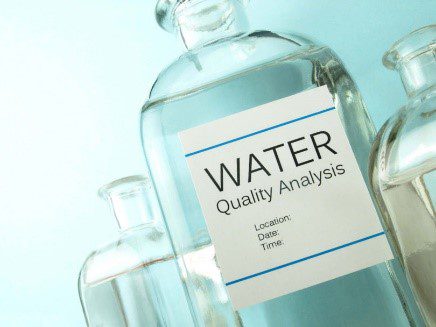
It all starts with a Water Test.
To help protect your family or business when making a major purchase that could require water treatment, step one should be to have your water tested. In today’s world, whether you are on well water or municipal (city) water, do not take the water’s quality for granted or assume it is safe to drink.
Here are some basic tests that should be checked on a yearly basis:
- pH of water measures between 1 and 14. A neutral pH of 7 is ideal.
- Hardness in water is measured in grains per gallon. <1 grains are ideal
- Iron levels in both ferric and ferrous states are measured in ppm. <1 is ideal
- Nitrates and nitrites in water.
- Lead in the water.
- Bac-T (bacteriological) test
- Total Dissolved Solids, measured in PPM.
- Chlorine and chlorimines measured in PPM. Present in municipal water sources; used as a disinfectant.
- Hydrogen Sulfide Gas measured in PPM. Potentially present in private well water.
- Tannins measured in PPM. Discoloration from decaying vegetation.
These are 10 water tests to consider. It is best to test the water at the source, as this is the most accurate method. Municipalities treat with chemicals and can remove many of the problems. It is always a good idea to have your water properly tested by a water treatment professional or certified State Laboratory: http://gosimplelab.com/store/KENAI
Call us today. We’re happy to help!